
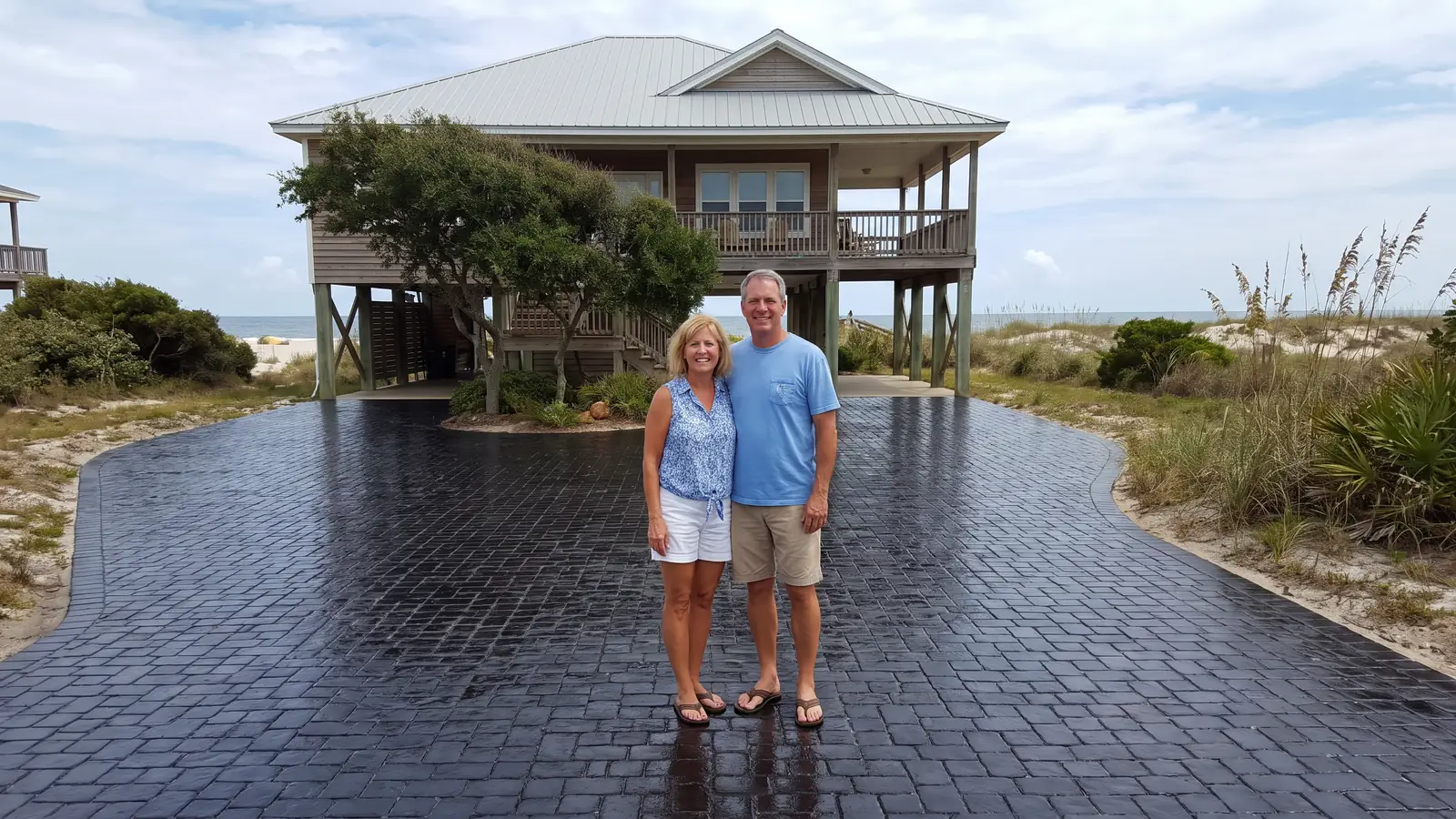
Paver sealing for Palm Coast homes
Paver Sealing in Palm Coast, FL
Palm Coast began in 1969 with plans for 48,000 home sites, so call (904) 468-6386 for a free paver sealing estimate.
- Brings out deeper paver color
- Fresh joint sand helps lock pavers in place
- Gives weeds less room to grow
- Makes the surface easier to keep clean
- Free estimate, no obligation
Request a Free Estimate
Free, no obligation.
Fast, careful paver sealing in Palm Coast
Paver sealing is available across Palm Coast, from the lettered sections west of I-95 to the canal streets in Palm Harbor. A local contractor washes, re-sands and seals driveways, patios and pool decks, and the first look is free. Dial (904) 468-6386 and you will have an answer within 1 business day, usually much sooner.
Say you pull in each day over a gray, spotty driveway, with a green edge along the garage and weeds in the joints. Cleaning, new joint sand and a fresh coat turn it back into one even color. Not ready to call? You can send in the short estimate form and describe the driveway.
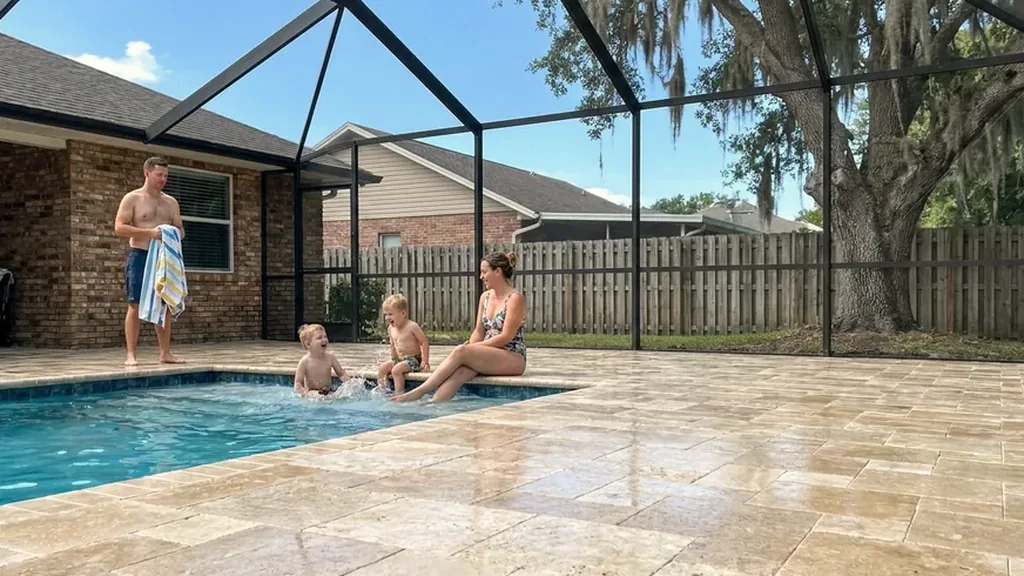
Why hire a local paver sealing contractor in Palm Coast?
A Palm Coast job depends on the canals, the flat lots and the lettered section your street sits in, which is why homeowners hire locally. For a read on your house, call (904) 468-6386.
Look at the lot
The contractor checks your Palm Coast driveway, apron, walks and patio free of charge, then states a total price.
Price check
Posted rates sit between $1.75 and $3.25 per square foot to clean, sand and seal. Hold bids against that span.
Grip and glow
Matte feels less slick near a pool or under a lanai. A wet look adds depth but wears its scuffs sooner.
Easy to say no
Choose the date and finish, or decline. The estimate commits you to nothing.
Get Your Free Estimate in Palm Coast
Tell us about your pavers in Palm Coast.
Free, no obligation
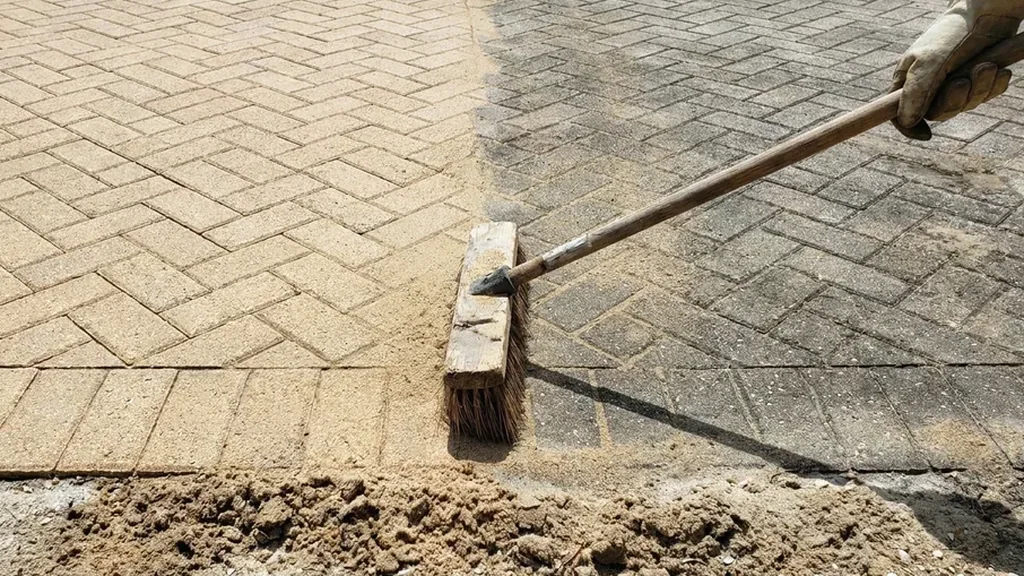
What paver problems show up most in Palm Coast?
Canal damp and Atlantic air
Palm Coast has 23 miles of saltwater canals and 46 miles of freshwater ones, and the Intracoastal borders the city on the east. A Palm Coast company says humidity, salt air and storm-season rain speed up fading, joint erosion, algae and staining. Another says canal moisture encourages mildew. Those are the conditions a wash and a sealed surface are meant to answer. If your lot backs onto a canal, mention it, since that changes how long the surface stays damp and how often it needs a wash. Fresh sealer also makes the next wash easier, since dirt sits on the surface rather than soaking in. If your lot backs onto a canal, mention it, since that changes how long the surface stays damp. The Intracoastal borders the city on the east, and the Hammock beyond it sits right on the Atlantic. A coat also gives mildew less to hold onto between washes.
Flat lots where water lingers
The city says it sits in a flat area where even small grade changes matter, and that some standing water in a swale is expected. Owners are responsible for the swale and the driveway culvert. Where a paver apron meets the swale, water and tire tracks both land. That edge can sink or lose sand first, so it gets checked before any coat goes on. Mention any spot where water stands after rain, since that points to a low edge or a base that has settled. Keeping the culvert ends clear is the owner's job, and a clear culvert helps the apron stay drier. Mention any spot where water stands after rain, since that points to a low edge. The city counts about 1,200 miles of swales, so this edge is part of most streets.
Sand that stays wet and moves
Federal soil surveyors list the Bimini series, whose type location is in Flagler County, as somewhat poorly drained, slowly permeable sand on low ridges near the coast. That describes the county's soil, and individual lots differ. Slow drainage keeps the base damp, and sand under pavers shifts when it is wet, which is why dips are repaired first. Sand that drains slowly also keeps joints wet longer, so new sand is swept in only once the surface is dry enough to take it. Slow drainage is one more reason to leave time for drying between the wash and the coat. Slow drainage also keeps joints wet longer, so new sand goes in once the surface can take it. Rain near the Bimini soil's type location averages about 55 inches a year, so wet sand under pavers is a regular condition.
Sections that grew in different decades
The first Palm Coast homes went up in 1972, and the population grew from 32,832 in 2000 to 89,258 in 2020. So a pavers job can mean a 1970s driveway in Pine Lakes or one laid a few years ago. Older pavers can carry unknown coats, and a solvent-based layer rules out water-based sealer above it. A contractor can usually tell the age of a coat from how it wears, and tests a small patch when it is unclear. Neighbors on the same street can have quite different surfaces, so each lot is read on its own. A contractor can usually tell the age of a coat from how it wears, and tests a small patch when unclear. With 39,763 housing units counted in 2020, Palm Coast has far more pavers than any single contractor could know by street name.
Lanais and enclosures that hold humidity
A Palm Coast company says screened lanais and pool enclosures trap humidity. Pavers under them can stay damp and grow algae, and algae makes a pool deck slick. A local company says treating that growth reduces slip hazards on pool decks and walkways. It is worth washing and sealing those areas with a grip-friendly finish in mind. Matte and grip-friendly finishes are worth asking about for any deck inside an enclosure. A sealed deck that dries evenly also looks better in photos and in person. Grip matters most where bare feet and pool water meet, which is why finish choice comes up at the estimate.
What does the letter on my Palm Coast street tell a paver contractor?
It tells roughly where you are in the original plan. ITT started the city in 1969, the first homes went up in 1972, and streets within a neighborhood share a first letter. B is Indian Trails on the west side, P is Pine Grove and Belle Terre, and R is Lehigh Woods to the south. Tell the contractor your letter when you send in the short estimate form.
The C and F sections, called Palm Harbor, sit on the Intracoastal side and hold the saltwater canal streets. Homes there back up to canals with direct access to the waterway. Salt air and damp can build up on pavers in those sections, so call (904) 468-6386 and mention the canal.
Pine Lakes is one of the older established neighborhoods, and the city has about 16 lettered sections plus newer subdivisions that skip the lettering. Older sections mean older pavers and unknown coats. To plan around yours, send in the short estimate form and say when your house was built. That single detail shapes the plan.
What does paver sealing cost in Palm Coast?
The yardstick here is the same as elsewhere in the region: published rates of $1.75 to $3.25 per square foot to clean, sand and seal. Mildew, empty joints and old sealer decide where a Palm Coast quote falls in that span, and wide lots add up quickly. To get a total for your lot, send in the short estimate form.
A lanai or pool enclosure adds work, since the surface under it needs extra washing and a careful finish. Tight access takes longer too, and old sealer that has failed has to be stripped before anything new goes down. Call (904) 468-6386 and describe the layout so the contractor can say which factors apply.
| Paved area | Typical example | Clean, sand and seal |
|---|---|---|
| 300 sq ft | Small patio or walkway | $525 to $975 |
| 600 sq ft | Two car driveway | $1,050 to $1,950 |
| 1,000 sq ft | Large driveway or pool deck | $1,750 to $3,250 |
| 1,500 sq ft | Driveway plus pool deck | $2,625 to $4,875 |
Math based on the $1.75 to $3.25 per square foot that Northeast Florida paver companies publish. Your contractor sets the actual price after seeing the surface. Repairs, leveling and stripping failed sealer are usually extra.
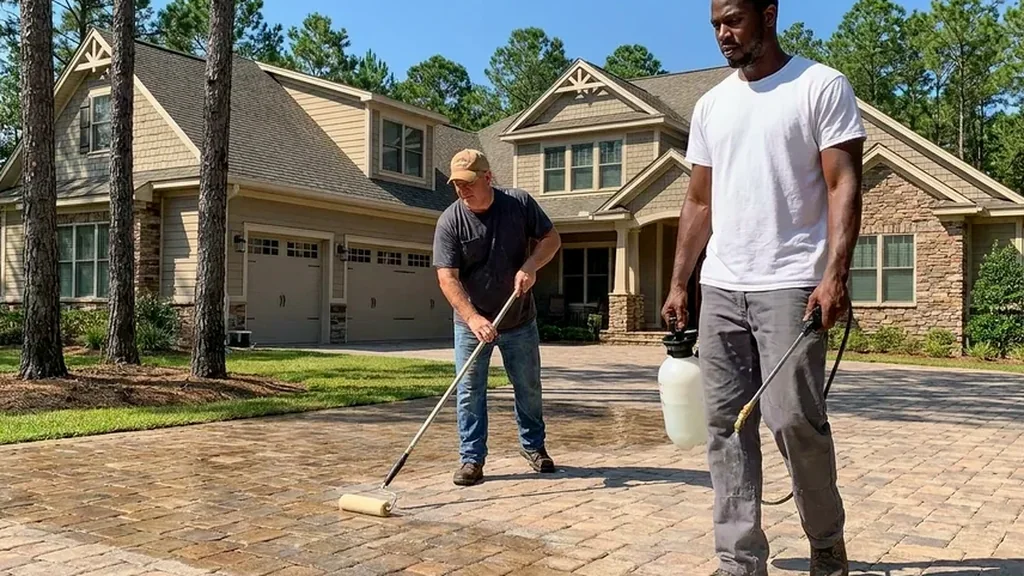
How does a paver sealing job work in Palm Coast?
Read the lot and the old coat
The contractor walks the driveway, apron, walks and pool deck looking for low spots, loose edges and leftover sealer, with extra attention on the swale edge. The old product is identified before anything is bought, since it decides which sealer type can go on. Use the visit to raise anything you want fixed.
Wash off mildew and tire grime
The wash takes off mildew, algae and tire marks. Damp corners, canal-side edges and spots under a lanai take the longest. Screens, doors and landscaping are kept clear of rinse water. Most of the visible change happens at this step. Pressure is set low to protect what joint sand is left.
Restock the joints
Because washing strips out joint sand, fresh sand goes in before any sealer. Wet sandy ground and heavy rain tend to pull sand out of Palm Coast joints. Full joints lock the pavers together, and a last sweep leaves a clean surface. Hand sweeping reaches narrow joints along walls and steps.
Let the pavers dry
Sealing waits for a dry surface, and the sand bed beneath can hold water after a storm. Flat ground sheds water slowly, and shade keeps humid air near the stone, so the contractor tests the pavers and shifts the day if they are wet. Flat ground means water leaves slowly, so a dry day or two is common before sealing.
Spray, back-roll, set return times
The sealer goes on with a sprayer, and a roller follows to work it into the joints and prevent puddles. The contractor gives exact times before anyone steps or parks on the surface. Write down the product name and the date, because the next contractor will need both. Irrigation near the pavers waits until the contractor clears the surface.
Complete paver services in Palm Coast
Canal lot or inland street, the sequence never changes: a wash, then sand, then a dry-out, then sealer. The wash lifts mildew and tire marks, new sand fills the joints, and the surface dries before the coat goes on. Sealing last keeps dirt out of the finish. To ask how long each step takes, call (904) 468-6386.
Palm Coast surfaces vary. A driveway apron near the swale takes water and tires, a pool deck inside an enclosure stays damp, and a front walk may sit in shade for most of the day. Each gets its own plan. Tell the contractor what you have when you send in the short estimate form.
Sealer comes in film-forming types, which sit on top and stabilize joint sand, and penetrating types, which soak in and leave the look unchanged. The old coat decides what can go on, since water-based cannot go over solvent-based. Matte or wet look is the last choice. Call (904) 468-6386 to compare options.
Flagler County's coast gets about 55 inches of rain a year near the Bimini soil's type location, and storm-season downpours are heavy. Sealer needs a dry surface, and bedding sand can stay damp after rain. A good contractor holds a spare day. To pick a date, send in the short estimate form.
Questions to ask before you hire
- How do you decide between a natural look and a wet look finish?
- If wind or afternoon showers come up on the day, what happens to the job?
- Will someone walk the finished job with me before I pay?
- Will you point out any pavers that have sunk or shifted before you start?
- Can you remove the green algae and the rust spots that sprinklers leave behind?
- If a patch peels or turns cloudy later, who do I call, and what happens next?
- Do you give the pavers time to dry fully after the wash, or seal them the same morning?
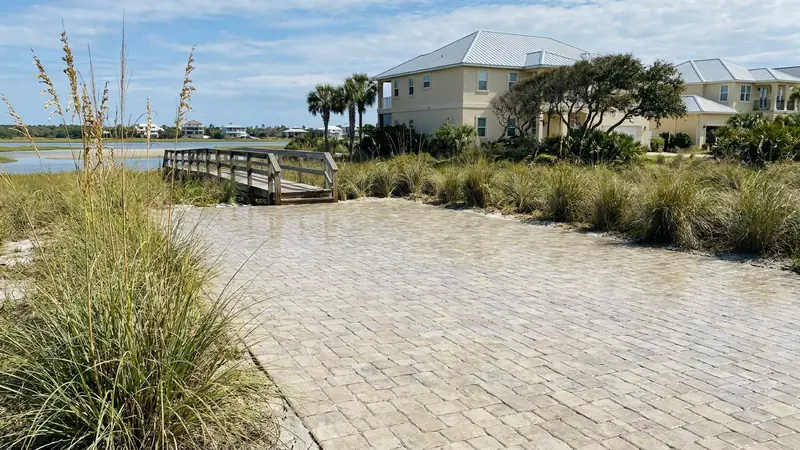
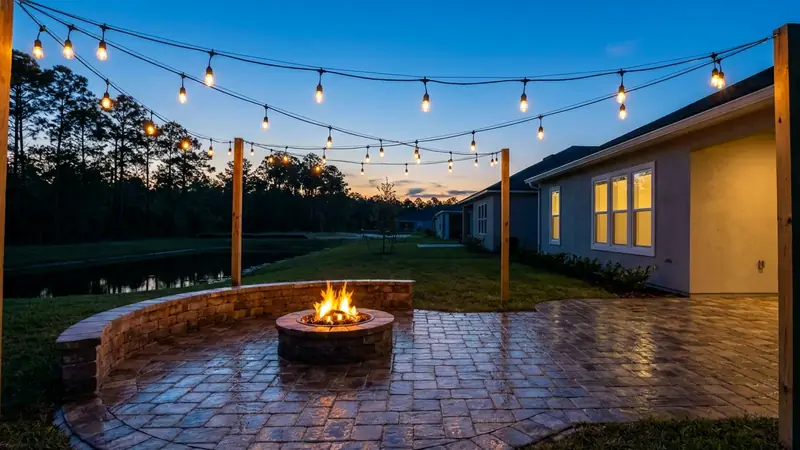
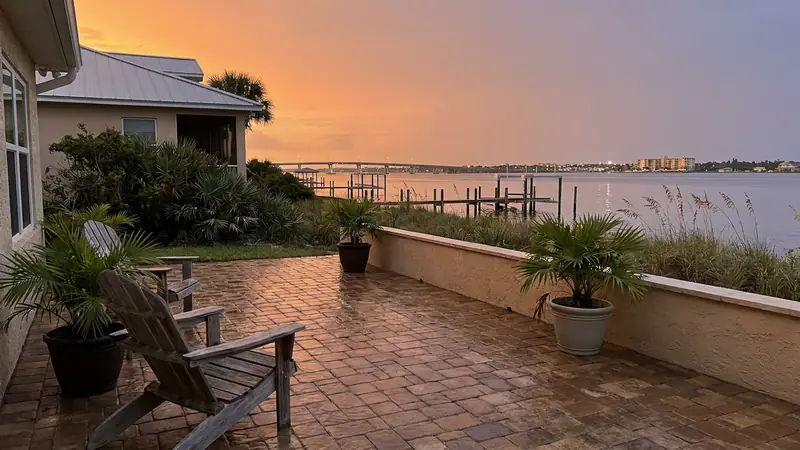
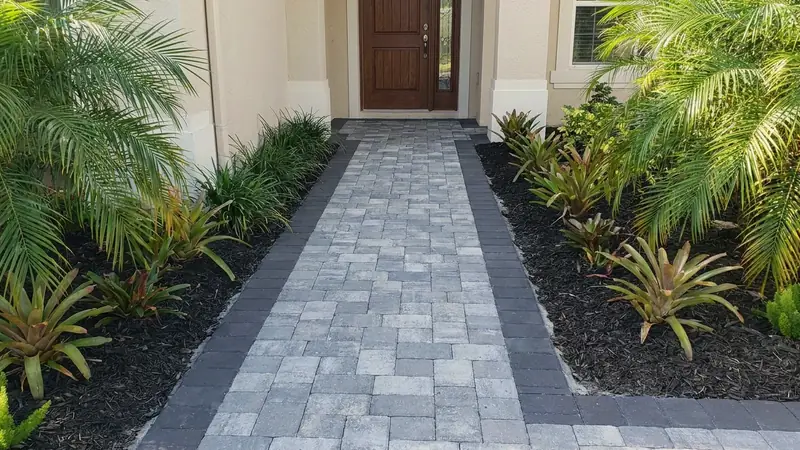
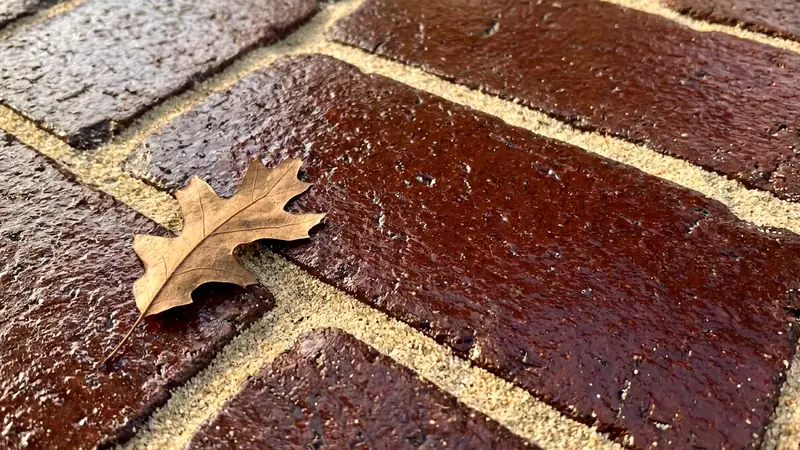
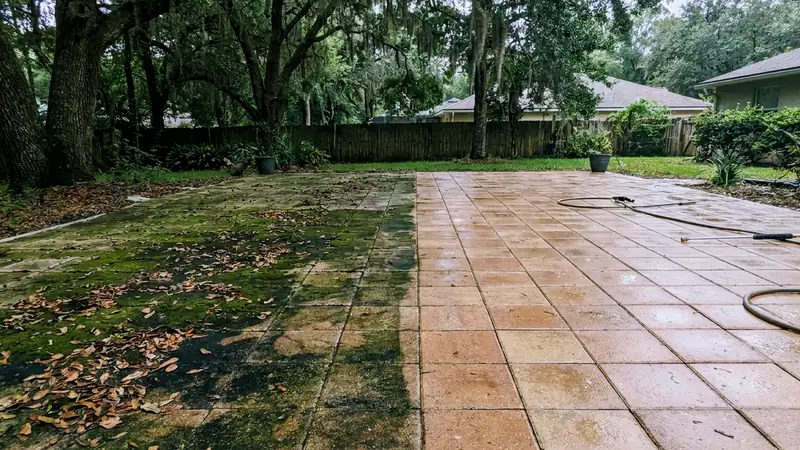
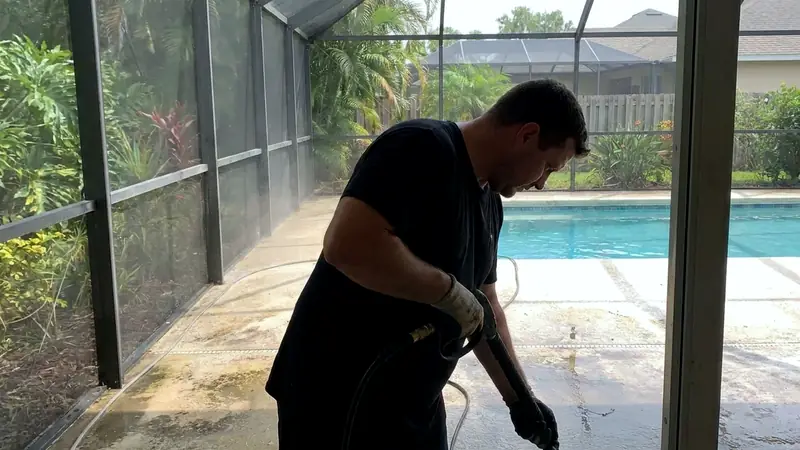
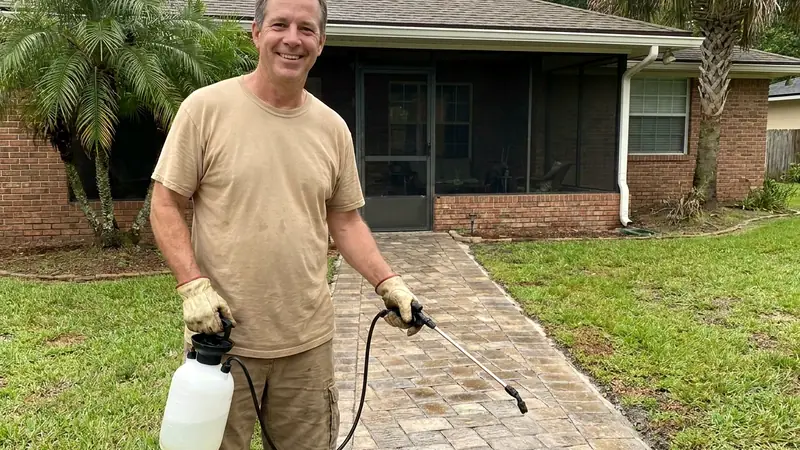
What do sealed pavers look like around Palm Coast?
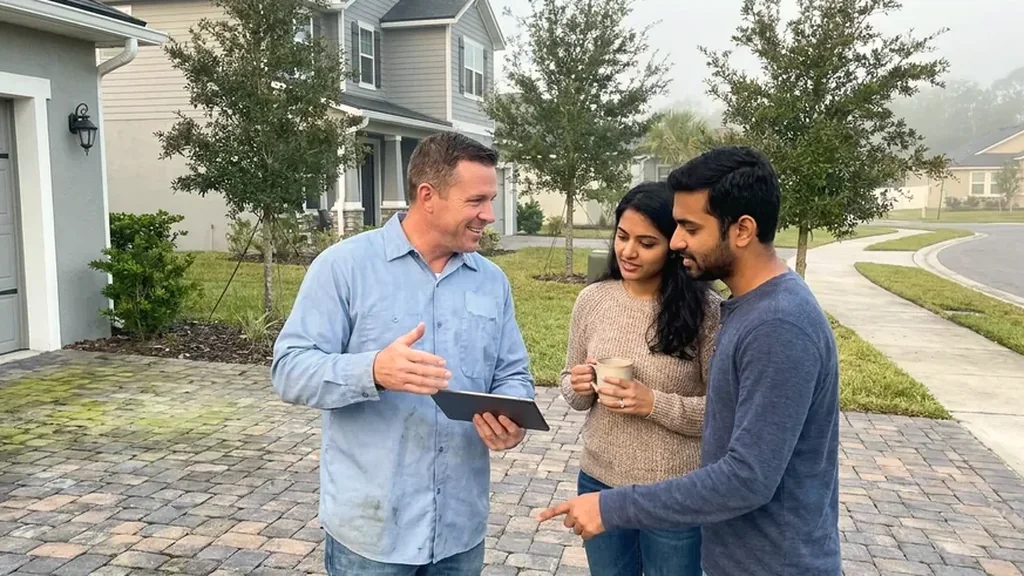
Why local matters in Palm Coast
A contractor who works Palm Coast asks which section you live in, because the letter points to the age of the lot and whether it sits on a canal. That is quicker than guessing from a street name. Someone from outside Flagler County may not think to ask. To talk with a contractor who works Flagler County, call (904) 468-6386.
Local knowledge also helps with flat ground. The city notes that its land is flat and that some standing water in swales is expected. A local contractor looks at how water leaves your driveway before sealing. You can send in the short estimate form and ask how the contractor handles drainage at the apron.
Coastal weather sets the pace. Storm-season rain is heavy, and humid air near the canals slows drying, so a local contractor builds a buffer day into the plan. To learn how a coastal rain delay is handled, send in the short estimate form.
How did Palm Coast grow from pine woods to a city of 89,000?
In the late 1950s the land was swamp and pine forest with a few farms. ITT began Palm Coast in 1969 with plans for 48,000 home sites, the first homes went up in 1972, and the city was incorporated at the end of 1999. If your home is in one of the older lettered sections, send in the short estimate form and mention the section.
The Hammock Dunes Bridge, built in 1988, links the Hammock to the mainland across the Intracoastal. The European Village opened in Palm Harbor in 2006, and the city has more than 130 miles of trails. If you live near one of them, call (904) 468-6386 and name it. The estimate is free.
Frequently Asked Questions
Is it good to seal pavers in Palm Coast?
Yes, because humidity, salt air and heavy rain work on bare pavers here. A St. Augustine paver company says sealing protects a surface from stains, fading and wear. Pavers that are sound but faded are often brought back with a wash and a new coat.
Is there a pressure washing business near Palm Coast that also seals pavers?
Yes, so a single crew can wash, re-sand and seal in one visit around Palm Coast. Request the estimate first and you will know the price before work begins.
Can I pressure wash patio pavers in Palm Coast?
Pressure washing is the first step of a sealing job, but the pressure has to suit the surface. Too much can damage pavers and strip joint sand, and it can leave marks no sealer will hide. A contractor sets the pressure, replaces the sand and seals afterward. Family Handyman also warns that pressure washing may damage pavers if you are not careful or use the wrong equipment.
Why is paver sealing so expensive in Palm Coast?
Sealer is only one line in the price, which also covers washing, sand and drying time. A careful two-stage application is part of the job, and stripping a failed coat costs extra. Square-foot pricing keeps bids comparable from one company to the next.
How much does paver sealing cost in Palm Coast?
Local postings for this region show $1.75 to $3.25 per square foot to clean, sand and seal. Your price depends on mildew, joint sand and any old coat. Ask whether the quote includes new joint sand, since some leave it out.
How long does paver sealing last in Palm Coast?
Companies commonly quote two to five years of life per coat, so plan the next one around that. Canal damp, shade and daily tires make the early end likelier. When drops sink in and darken a paver, the sealer is done, and beading drops mean it still works.
Does canal water or salt air hurt pavers in Palm Coast?
They do not destroy pavers, but they speed up fading, algae and joint erosion, according to a Palm Coast company. Saltwater canals and the Intracoastal sit on the east side of the city. Sealing and fresh joint sand protect the surface and the base.
Will sealed pool deck pavers be slippery in Palm Coast?
A wet look can feel slick when wet, and matte is the safer choice around pools. Algae is the bigger slip risk, and cleaning it off reduces slip hazards. Tell the contractor about the pool deck when you ask for a quote.
Ready for a Free Estimate in Palm Coast?
Call (904) 468-6386 and tell us about your pavers.
Free, no obligation