
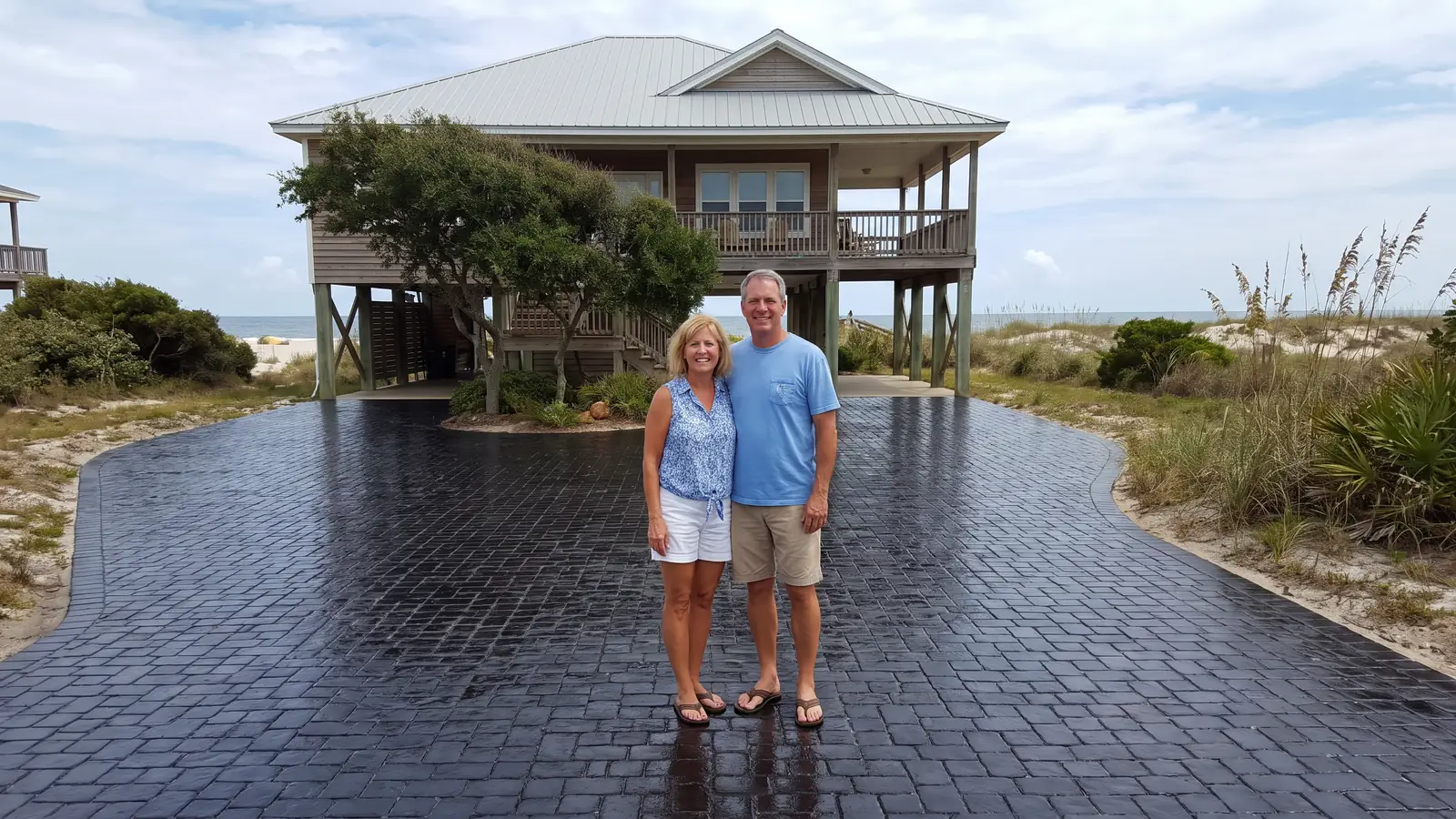
Paver sealing for Fleming Island homes
Paver Sealing in Fleming Island, FL
Water borders Fleming Island on every side, so call (904) 468-6386 for a free paver sealing estimate.
- Brings out deeper paver color
- Fresh joint sand helps lock pavers in place
- Gives weeds less room to grow
- Makes the surface easier to keep clean
- Free estimate, no obligation
Request a Free Estimate
Free, no obligation.
Fast, careful paver sealing in Fleming Island
Paver sealing is available in Fleming Island, from the older streets of Pace Island to Eagle Harbor and Fleming Island Plantation. Driveways, patios and pool decks are washed, re-sanded and sealed by a local contractor, and the estimate is free. Call (904) 468-6386 and expect a reply within 1 business day, often much sooner. There is no obligation.
Say your driveway pavers went in when the house was built and have faded since, with weeds in the joints and a dull, streaky look. Wash it, refill the joints, seal it, and the surface goes back to a single tone. Details first? You can send in the short estimate form and list the age of the pavers.
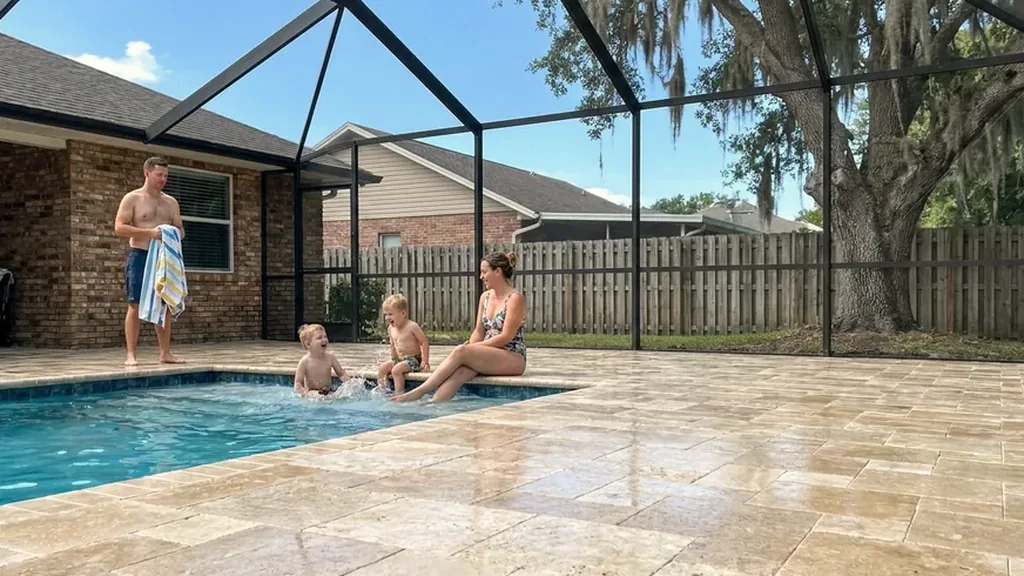
Why hire a local paver sealing contractor in Fleming Island?
Pavers on Fleming Island were laid in different years, on sandy ground, with water on every side, so a local contractor's experience helps. To get a read on yours, send in the short estimate form.
Pavers dated first
The contractor checks your Fleming Island pavers for age and condition at no charge and names a price in advance.
Rate to compare
Northeast Florida postings run $1.75 to $3.25 per square foot to clean, sand and seal. Compare each bid to it.
Rule-friendly finish
A natural-look coat is easier to clear with an HOA or CDD. A wet look gives more shine and shows scuffs sooner.
You hold the pen
Pick the date, the finish and whether to go ahead. Nothing is owed for the estimate.
Get Your Free Estimate in Fleming Island
Tell us about your pavers in Fleming Island.
Free, no obligation
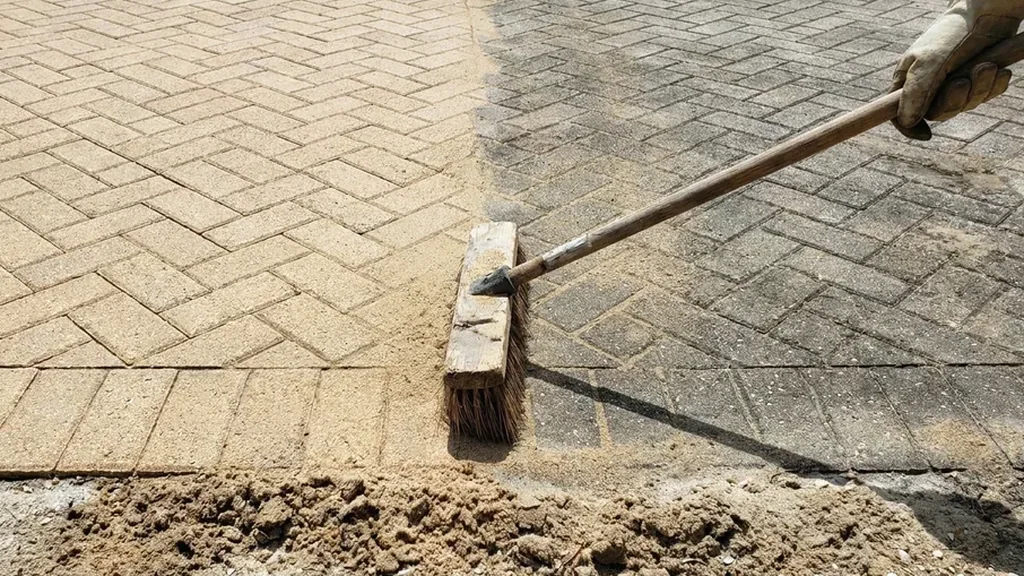
What paver problems show up most in Fleming Island?
Builder pavers on a later coat
Pace Island opened to its first resident in late 1989, Eagle Harbor started in the 1990s and Fleming Island Plantation was approved in 1998. Surfaces laid in those years may have been sealed once, twice or never. Because water-based sealer cannot be applied over solvent-based sealer, the existing product has to be identified first. Ask the builder or the previous owner for any records, and photos help if you have them. If not, a small test patch tells the contractor what the coat is. A coat that has failed in patches usually needs to come off before a new one goes down. Eagle Harbor, part of a 2,600-acre project begun in the 1990s, had 2,225 homes by 2004, so a lot of pavers share a similar age. Eagle Harbor homes carry a CDD assessment, so ask your association about finish rules early.
Sand that drains straight through
Soil scientists put the Penney series' type location in Clay County and call it deep, excessively drained, rapidly permeable sand. That is a county description, so your lot may vary. Fast-draining sand is good news for puddles, but it also means joint sand moves out and the edges can shift, so joints are refilled before sealing. The base under the pavers matters as much as the sand on top. If edges have crept, the contractor resets them before the wash. Wet weather also washes sand out of the joints faster than it washes it back in. Rain averages about 52 inches a year near the Penney soil's type location, so joint sand gets tested often.
Water on every side
Wikipedia says Fleming Island is bordered by water or wetlands on all sides, from the St. Johns River to Doctors Lake, Black Creek and Swimming Pen Creek. About 31 percent of its area is water. Humid air holds moisture in pavers, a paver maker notes, so damp corners grow mildew and need more washing. Doctors Lake is a brackish estuary, which gives the island plenty of open water and damp air. Creekside and lakeside lots can wait longer for a dry day before the coat. Mildew tends to start where shade and moisture meet. Doctors Lake covers 13 square miles and reaches the river through Doctors Inlet, so open water is never far from a Fleming Island yard.
New pavers that are not ready yet
Fleming Island kept growing after its first neighborhoods, and homes still sit on newer pavers. A Jacksonville paver company says new installations should wait 30 to 60 days before the first sealing so efflorescence can work out. Sealing too early traps that white residue, and it is hard to fix later. Ask the builder or installer for the install date, since that sets the first sealing date. If the date is unknown, the contractor can judge it from the surface. Efflorescence is a white residue that moisture carries up through concrete pavers. If the install date is unknown, the contractor can judge it from the surface. Development began on the island in 1992, so new pavers and old pavers often share a street.
Leaves and acorns from the yard trees
The University of Florida says laurel oak leaves typically do not fall until early spring and that water oak acorns stain asphalt and concrete. A yard oak can feed brown marks and green growth on a driveway or walk beneath it. Washing clears most of it, and sealer makes the next wash easier. Tell the contractor which trees overhang the drive, because that sets how much washing the shaded part needs. Leaves also trap moisture against the pavers. A sealed surface sheds those stains more easily than bare pavers do. Moccasin Slough on the north end and Black Creek Park on the south end are green corridors, so tree cover is part of the island's setting.
How old are the pavers in my Fleming Island neighborhood, and does it matter?
Yes, age tells the contractor what to expect. The first Pace Island resident arrived just before Christmas 1989, and homes there date from 1989 to 2002. Pavers that old may have been sealed more than once. Share your build year when you send in the short estimate form.
Eagle Harbor started in the 1990s as part of a 2,600-acre project and had 2,225 homes by 2004. Fleming Island Plantation was approved in 1998 for up to 3,790 homes. Many pavers in those areas are now old enough for a first or repeat coat. Call (904) 468-6386 with your neighborhood and build year.
Associations and CDDs shape the rules too. A market report says Eagle Harbor has a CDD assessment and an HOA, and a Jacksonville paver page says high-gloss finishes are more likely than natural-look sealer to need approval. Ask your association first, then send in the short estimate form. A short call to the board before work starts avoids surprises.
What does paver sealing cost in Fleming Island?
Age drives much of the price. Posted rates run from $1.75 to $3.25 per square foot to clean, sand and seal, and an older driveway with thin joints and failed sealer sits higher in that span than a newer one. A big layout adds up too. For a figure on your pavers, send in the short estimate form.
Stripping a failed old coat costs extra because the old product has to come off first. Mildew in damp corners and joints that swallow a lot of sand add hours as well. Newer pavers cost less to prepare but must wait their 30 to 60 days. Call (904) 468-6386 and share the age of the pavers so the contractor can walk you through the price.
| Paved area | Typical example | Clean, sand and seal |
|---|---|---|
| 300 sq ft | Small patio or walkway | $525 to $975 |
| 600 sq ft | Two car driveway | $1,050 to $1,950 |
| 1,000 sq ft | Large driveway or pool deck | $1,750 to $3,250 |
| 1,500 sq ft | Driveway plus pool deck | $2,625 to $4,875 |
Math based on the $1.75 to $3.25 per square foot that Northeast Florida paver companies publish. Your contractor sets the actual price after seeing the surface. Repairs, leveling and stripping failed sealer are usually extra.
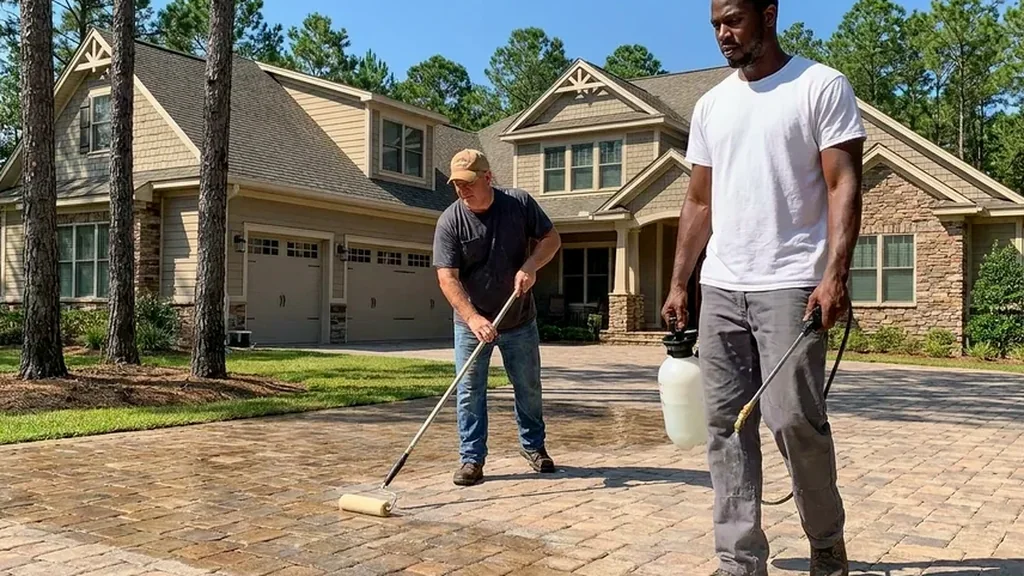
How does a paver sealing job work in Fleming Island?
Date the pavers, test the coat
The contractor asks when the pavers went in, then goes over the driveway, walks and pool deck, noting dips, lifted edges and any coat already there. A water-based product cannot be added over solvent-based sealer, so the existing one is identified. On newer homes the 30 to 60 day wait is checked. While the contractor is there, ask about finish, timing and any association rules. Records from the builder, if you have them, speed this step up.
Wash off mildew and leaf marks
Cleaning lifts mildew from damp corners, brown leaf stains and tire marks. Edges near a lake-side lot, or under a yard oak, usually take longer. Rinse water is kept away from doors, screens and beds, and the clean surface is what the coat will hold onto. Washing settings stay gentle so the remaining sand is not blasted out.
Refill with fresh sand
The wash carries joint sand away, and the sandy soil here lets more leave on its own. New sand goes in before the coat so the pavers stay locked and weeds get little room. A last pass with the broom clears loose grains. Joints that sat empty for a long time may take two passes.
Wait for a dry surface
Dry pavers are a must for sealer, and the bedding sand below can hold damp long after a storm. With water on every side of the island, humid air slows drying in shaded corners. The contractor checks first and moves the date when needed. Shaded strips beside the house are checked last.
Spray first, then back-roll
Pros typically spray first, then back-roll to push the sealer into the joints. Return times for people and vehicles come from the contractor. Keep the product name on file, since it tells the next contractor what can go on top. Sprinkler zones stay off until the contractor says the coat is safe.
Complete paver services in Fleming Island
Fleming Island jobs run in four stages: wash, re-sand, dry and seal. The wash clears mildew and leaf marks, new sand fills joints that sandy soil has emptied, and the sealer waits until the stone is dry. Skipping the order is how dirt ends up under the coat. For how long each stage runs, call (904) 468-6386.
Age sets the plan. A 1990s driveway may call for a strip-and-reseal decision, while a newer one needs only a first coat once the wait is over. Pool decks and lanai edges need grip and careful rinsing, and walks beside yard oaks stay damp. Tell the contractor what you have when you send in the short estimate form.
Start the sealer choice with the old coat, because water-based cannot follow solvent-based. Then pick the look, since matte clears an HOA more easily while a wet look is glossier and shows scuffs sooner. On a newer home, hold off until the first sealing window opens. Call (904) 468-6386 to talk it through.
Rain and heat follow a pattern in this part of Clay County: about 52 inches a year near the Penney soil's type location, mostly in warm months, with November to April the driest stretch. Bedding sand under pavers can stay damp after a storm, so a spare day helps. To choose a date, send in the short estimate form.
Questions to ask before you hire
- Will you tell me the square footage you measured and what each square foot costs?
- How do you decide between a natural look and a wet look finish?
- Do you rinse the salt off before the sealer goes on, or only wash the surface?
- Will you point out any pavers that have sunk or shifted before you start?
- Can I see a written estimate with the sealer product and the number of coats on it?
- Will someone walk the finished job with me before I pay?
- Do you give the pavers time to dry fully after the wash, or seal them the same morning?
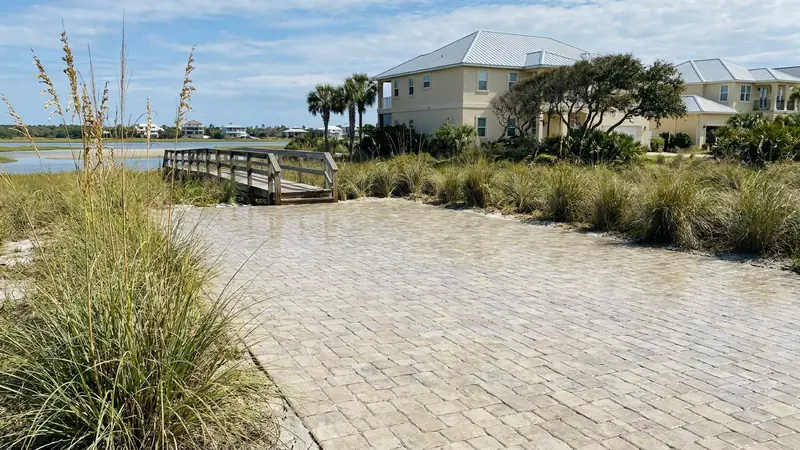
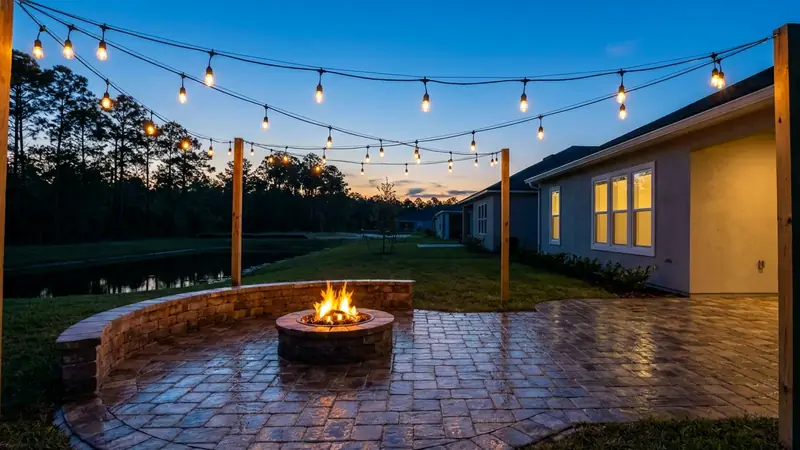
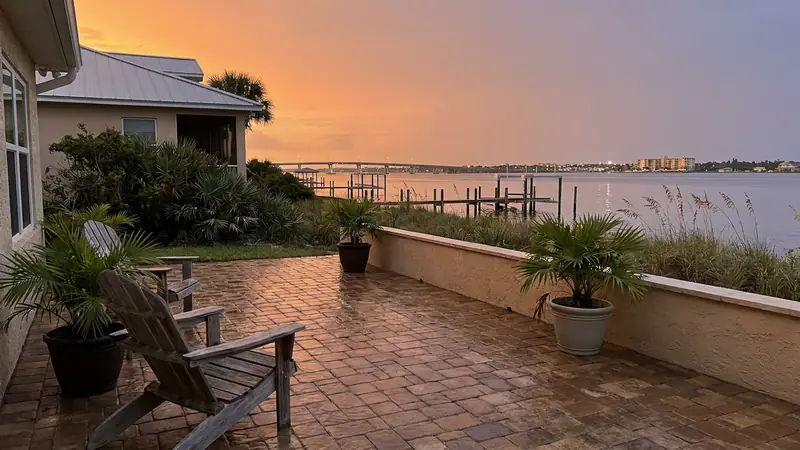
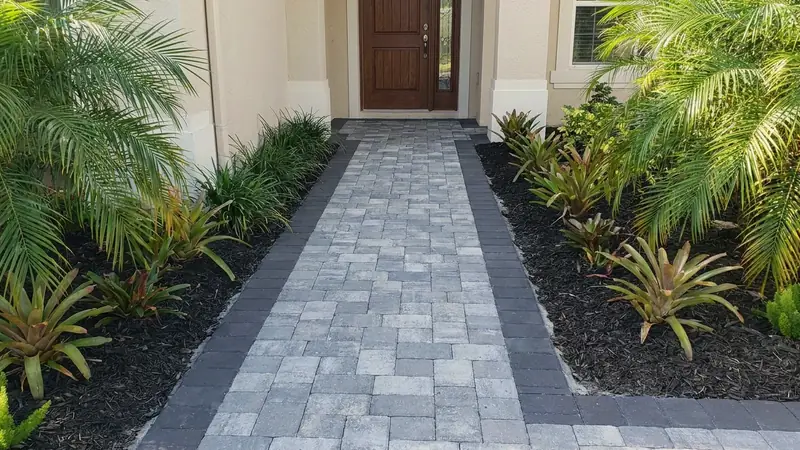
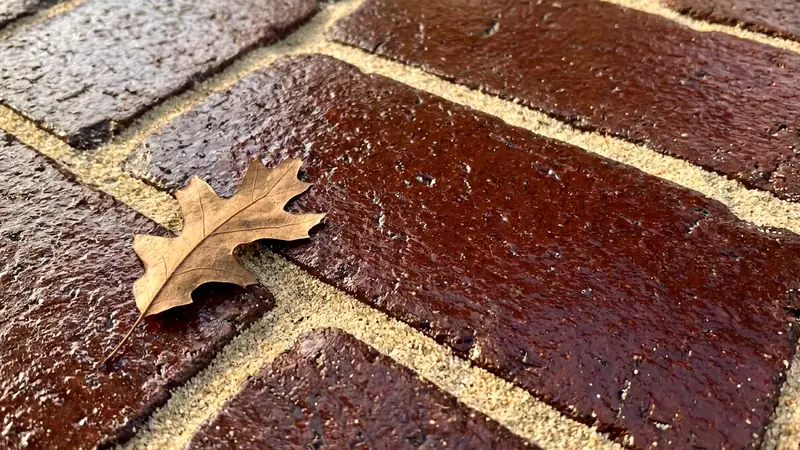
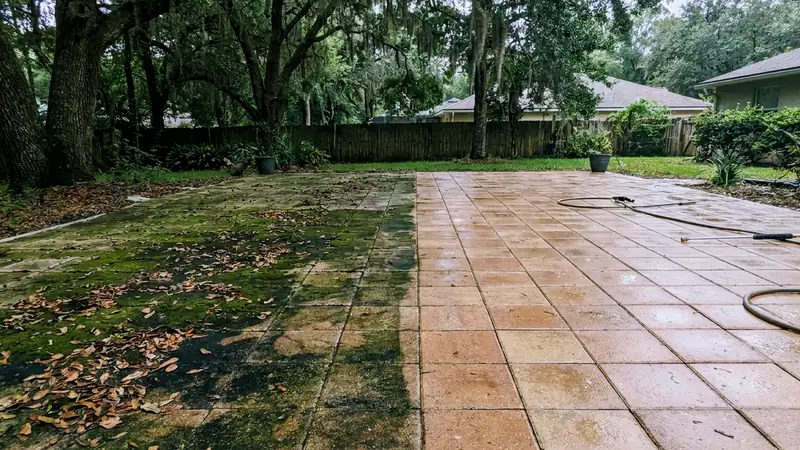
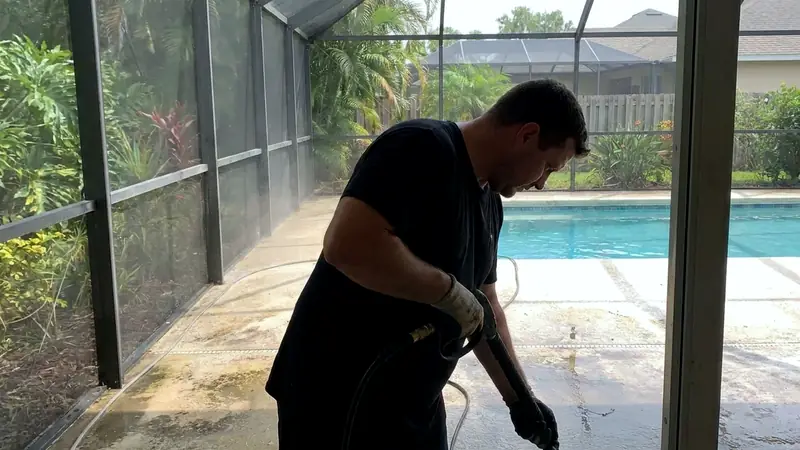
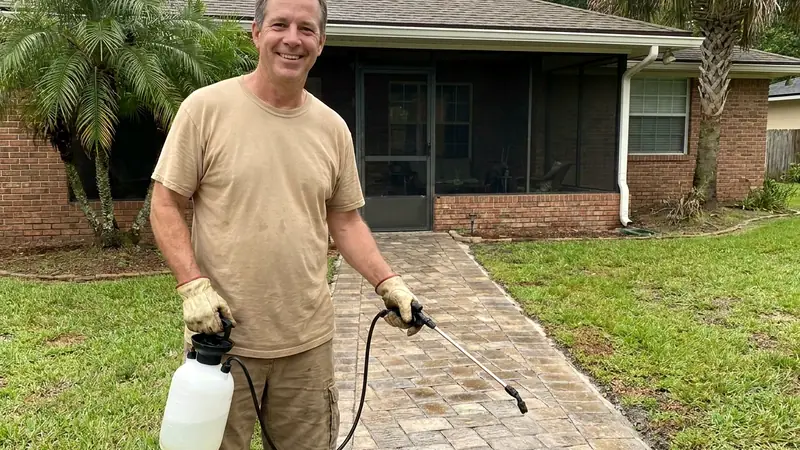
What do sealed pavers look like around Fleming Island?
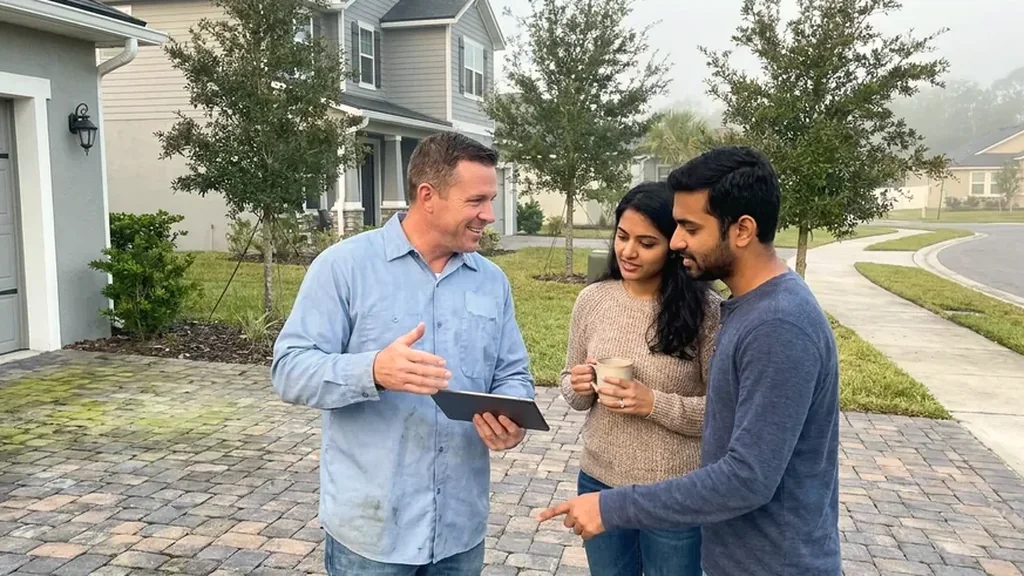
Why local matters in Fleming Island
A contractor who works Fleming Island asks for the build year first. That single question says a lot about the pavers, the likely coat and the sand under them. A crew from outside Clay County may skip it. To reach a contractor who knows these neighborhoods, call (904) 468-6386.
Rules come into it as well. Some Fleming Island streets sit inside an HOA or a CDD, and each can treat finish and contractor access in its own way. A local contractor asks early and plans around it. To mention your association, send in the short estimate form.
Wet weather matters on a low island. Water borders it on every side, and summer storms arrive fast. A local contractor keeps a spare day rather than sealing damp pavers. To hear how a wet-weather schedule works, send in the short estimate form.
What stood on Fleming Island before the neighborhoods went in?
A plantation did. George Fleming received a 1,000-acre Spanish grant and set up Hibernia in 1790, and St. Margaret's Episcopal Church, built from 1875 to 1878 on Old Church Road, is on the National Register. In 1942 the Navy built four asphalt runways here for an auxiliary field, and the runways came out in the late 1990s. If you live near Old Church Road, send in the short estimate form.
An 8-foot sidewalk runs about 7 miles along the island, Black Creek Park sits on the south end and Moccasin Slough has a canal for canoes on the north. Eagle Harbor has a waterfront park on Doctors Lake, a brackish estuary. Living close to any of them is a good reason to call (904) 468-6386. The estimate is free.
Frequently Asked Questions
How much is paver sealer per square foot in Fleming Island?
Northeast Florida rates in the published range are $1.75 to $3.25 per square foot to clean, sand and seal. A Fleming Island job lands inside that range based on paver age, joint sand and any old coat. Ask for total square footage on the quote.
Is it good to seal pavers in Fleming Island?
Yes, since sandy ground, humidity and summer rain all work on bare pavers. Sand stays put better under a sealed surface, and stains sit on top instead of soaking in. Pavers that are firm but dull often need a wash, fresh sand and one new coat. Water covers about 31 percent of the area, so damp air is part of the setting.
How long do paver sealers last in Fleming Island?
Quotes in this region put the gap between coats at two to five years. Daily tires and yard-oak shade on a driveway make the early end likelier. Water that soaks in and darkens the stone instead of beading means the coat is spent. Write down the date, so the next coat is easy to schedule.
Is it better to spray or roll paver sealer?
Pros typically do both. Crews usually spray first and then back-roll, which pushes sealer into the joints and stops puddles. Pure rolling risks lap marks, so ask which method your contractor plans to use. Several different builders worked in Eagle Harbor, so surfaces vary from street to street.
When can new pavers in Fleming Island be sealed?
One Jacksonville company advises a wait of 30 to 60 days after the pavers go in, so efflorescence can work its way out. Seal early and the white residue can end up locked under the coat. After the wait, the joints are re-sanded and the sealer goes on.
Does Fleming Island's sandy soil affect pavers?
Yes, in a quiet way. County-level USDA data describes Clay County's Penney soil as excessively drained sand, which lets joint sand move out. That is why joints are refilled before sealing and checked at each new coat. Rapidly permeable sand also dries fast after rain, which helps on sealing day.
Does my Fleming Island HOA need to approve the sealer?
It depends on your declaration. A natural-look coat may be treated as maintenance, but a color-enhancing or glossy finish is more likely to need a yes from the board. Check your rules and ask about any CDD requirements as well. Get the answer in writing and hand a copy to the contractor.
Can old pavers in Fleming Island still be sealed?
Usually yes, if they are structurally sound. The contractor checks for dips and loose edges and repairs them first. If an old coat has failed, it may need to be stripped, which adds to the price. Photos of the surface help the contractor give a clear plan.
Nearby areas we serve
Ready for a Free Estimate in Fleming Island?
Call (904) 468-6386 and tell us about your pavers.
Free, no obligation